NKCC1 chloride importer antagonists attenuate many neurological and psychiatric disorders
Yehezkel Ben-Ari, Review Trends in Neurosciences August 2017

 Yehezkel Ben-Ari
Amandine Fernandez, Camille Dumon, Damien Guimond, Roman Tyzio, Paolo Bonifazi, Natalia Lozovaya, Nail Burnashev, Diana C Ferrari, Yehezkel Ben-Ari; The GABA Developmental Shift Is Abolished by Maternal Immune Activation Already at Birth, Cerebral Cortex, novembre 2018 Article online Maternal Immune Activation (MIA) is due to an intrauterine infection that perturbs the immune system leading to the … Read more

An interesting observation linking metabolism with the GABA developmental shift and developmental disorders. Studying the well characterized GABA developmental shift with excitatory actions of GABA on immature neurons and inhibitory ones in adults, J-L Gaiarsa, C Porcher and colleagues have tested the hypothesis that metabolism and a major hormone controlling it -leptin- impact the time … Read more

The spectrum of autistic syndromes is composed of very different syndromes, which often causes diagnostic problems and explains both our very partial understanding of the underlying mechanisms and the fact that there is currently no medication approved by the European and American authorities. This also explains why clueless mothers – and this is easily understandable … Read more

No offense to the aficionados of miracle solutions, but the discovery of new drugs requires experiments made on animal models; most often rodents or small mammals (cf this article for details). There was a not too distant time when there was no control over the maintenance and life conditions of these animals with obvious abuses … Read more

It has been three decades since we were promised the earth and since all diseases would be a thing of the past. Immortality was almost planned (by 2045) according to Kurzweil, Google’s guru; the non-genetic cognitive research was old and condemned to vegetate and be maintained by dinosaurs. It is sometimes quite funny to see … Read more

Connecting essential issues that seem to have no link, introducing them with intelligence and humor while basing them on example from daily life is an exercise that only few experts can manage. The book of Pablo Jensen, physicist and sociologist, “Pourquoi la société ne se laisse pas mettre en équations”, that can be translated in … Read more

In mammals, birth is one of the most biologically complex processes for both the woman and the fetus. Indeed, a complex hormonal network is set up to allow delivery, while the fetus must, at birth, quickly adjust its metabolic, hormonal, pulmonary, cardiovascular, immunological, and microbiotic functions to allow its survival. The conditions under which this … Read more

We live in a great world! Our goal is to simplify everything, to quickly diagnose diseases with genetics and big data, and now, we don’t even need to go through preclinical studies on mammals. These wonderful worms with a thousand cells, a super simple nervous system compared to the trillions of connections in the human … Read more

A recent publication has been hailed by the media as the proof that empathy has a genetic origin. It is unfortunate that journalists do not bother to read scientific articles properly and learn about the limitations of what is shown in this article as in others that suggest that autism is genetic at 15-25%, schizophrenia … Read more

Following the recent publication of a paper called “GABAergic inhibition in dual-transmission cholinergic and GABAergic striatal interneurons is abolished in Parkinson disease“, Erwan Bézard, director of the Neurodégénérative Diseases Institute of Bordeauxpublished a commentary, that you can find here. Here’s our answer: First of all, we always pay attention to discussions and criticisms and we welcome … Read more
We recently published a paper called “GABAergic inhibition in dual-transmission cholinergic and GABAergic striatal interneurons is abolished in Parkinson disease“. Prof Tepper briefly commented it on Twitter. Here’s our answer: Our paper is not some sort of “artefact”. Things are never so simple, they usually have an explanation. The devil, as we all know, … Read more

A new study led by Prs. Yehezkel Ben-Ari & Constance Hammond (Neurochlore and B&A Therapeutics, Marseille, France) demonstrates that bumetanide, an antagonist of the NKCC1 chloride importer, normalizes the activity of neurons in the striatum and alleviates motor impairment in a mouse model of Parkinson’s disease. These findings corroborate the results of a pilot clinical … Read more

Bumetanide for autism: more eye contact, less amygdala activation Nouchine Hadjikhani (Martinos Center for Biomedical Imaging, Harvard Medical School, Boston, Etats-Unis et Université de Gothenburg, Gothenburg, Suède), Eric Lemonnier (Centre Hospitalier Universitaire, Limoges, France) et Yehezkel Ben-Ari (Neurochlore, Marseille, France) One of the permanent features of autistic patients is the fear of looking at the … Read more

The birth process took millions of years to be developed. It must allow 4 major reactions: a passage from an immunologically protected environment to the external environment, the acquisition of microbes in its digestive system, the transition from a temperature of 38 ° to colder external temperatures and especially the evacuation of the water molecules … Read more

A large part of the therapeutic applications of biomedical research is generated in innovation incubators. More than 70% of new drugs come from discoveries made by small structures close to academic research, which have a greater capacity for innovation than larger companies. These ones invest in start-ups by buying them or acquiring licenses. With a … Read more

This is a brain syndrome that has genetic and environmental links with Stockholm syndrome; the same acute manifestations of paranoia, headaches, the hibernation of the cortical structures involved in reasoning, and an unhealthy attraction to a group / population that is being loathed. This is at the root of every problem: women complain – the … Read more

The case is emblematic of the protectionism of the US authorities. A German company discovers a product that would have a beneficial effect on female orgasm. After expensive but successful trials, it asks the Food and Drug Administration (FDA) authorities for a US marketing authorization. The 28 experts of the commission reject it, arguing that … Read more

Having a Nobel Prize does not protect you from ending in the saloon bar, especially nowadays. Luc Montagnier, Nobel Prize laureate for the discovery of the AIDS virus, is a perfect illustration of this. In 2010, disappointed by the welcome he received in France, he goes to China, and in an interview in Science, he … Read more

The Paper of Yves Frégnac in Science raises major issues that are on the convergence of the paucity of concepts in science, the evaluation and financing of scientific investigations and the false promises of big programs to understand the brain and treat neurological and psychiatric disorders. The incredible acceleration of technological advances attested every day … Read more

The increase of scientific frauds and publications that are not reproductible is a major concern that has been analyzed many times. So-called leading journals have more and more retractations, articles considered major and opening up new perspectives are abandoned because based on tampered or “arranged” results, even emanating from prestigious laboratories. These frauds, however, have … Read more

In a refreshing article, an American scientist proposes a series of changes to improve the functioning of the National Institutes of Health (NIH), one of the leading scientific research institutions in the US. Despite the differences in the organization of science in the US and Europe, it is interesting to note the similarity in the criticisms … Read more

This is now such a great time! A media artist has an opinion that you have to listen and follow, regardless of the field. On the topic of vaccination, Ms. Adjani states that “it is a crime against immunity which, probably, in the next twenty, thirty, forty, fifty years will be called a crime against … Read more

Overwhelming testimonies about the Sanofi and health officials disaster on the case of sodium valproate The dangers of this molecule has been known for at least 3 decades, resulting in life-long sequelae of children with autism, delayed development, drug-resistant epilepsy seizures, etc. These emotional and overwhelming testimonies show both the importance of the commitment of … Read more

Since the classical work of the late Paul Patterson, it is known that the activation of the immune system during the intrauterine period produces an autistic syndrome by activating the immune system and causing the release of inflammatory molecules such as interleukins which will impact the cerebral maturation. It is also known that in rodents … Read more


Yehezkel Ben-Ari, Review Trends in Neurosciences August 2017

According to some, immortality is for tomorrow and the baby who is going to live 1000 years already born. There are now singularity universities, and the popes of this trend are relying on a heavy mixture of science fiction and prophecies. R. Kurzweil for instance has decided that the evolution will reach its climax in … Read more

Artificial intelligence is trendy, it is invested with every virtues and vices/dangers. According to some people, there it is, happiness is tomorrow with immortality in support of it, and a sort of graft between human being and machine/robot living in the Garden of Eden. The reading of these “theses” and defenders illustrates perfectly how science … Read more

Deregulations are weapons that sometimes kill decades later. Thus, in the 1980s, when Mrs Thatcher deregulates sanitary controls and, above all, facilitates the conditions required to feed cows from animal carcasses (no need to boil completely and for long periods of time), it will lead years later to the crisis of mad cow disease with … Read more

Individuals with autism spectrum disorder (ASD) often find it difficult to look others in the eyes, and we don’t exactly know why. What could be granted for indifference could actually have a completely different explanation. Indeed, according to Nouchine Hadjikhani, cofounder of Neurochlore and director of the Neurolimbic Research Laboratory in the Martinos Center in … Read more
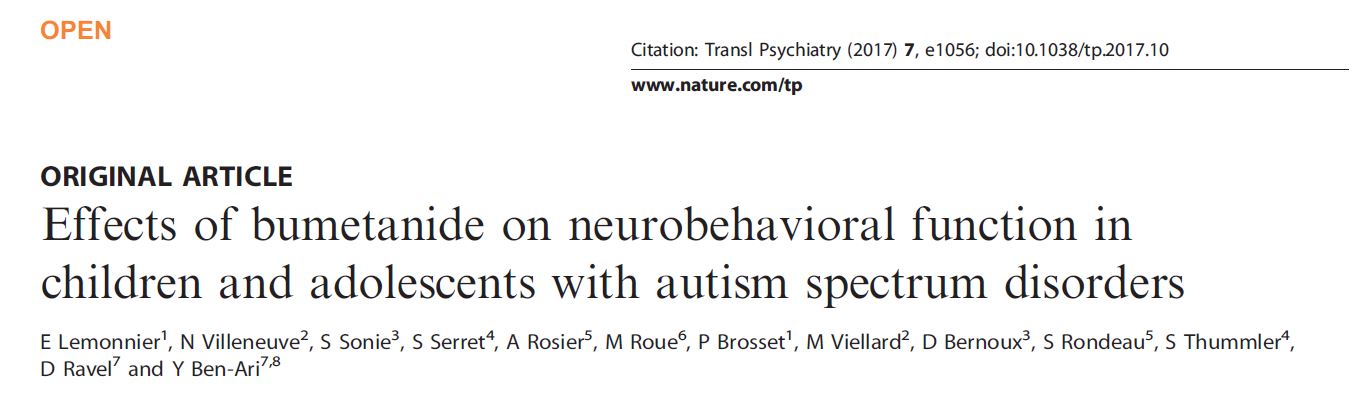
Autism is a complex neurodevelopmental disorder that affects about one in 100 children, with a prevalence four times higher in boys. The causes of this disorder remain unknown to date and no drug therapy is available. Treatment is only symptomatic and requires personalized educational therapies. We have been working for several years on the mechanism … Read more
Découvrez tous les sites de Yehezkel Ben-Ari/Discover all Yehezkel Ben-Ari websites