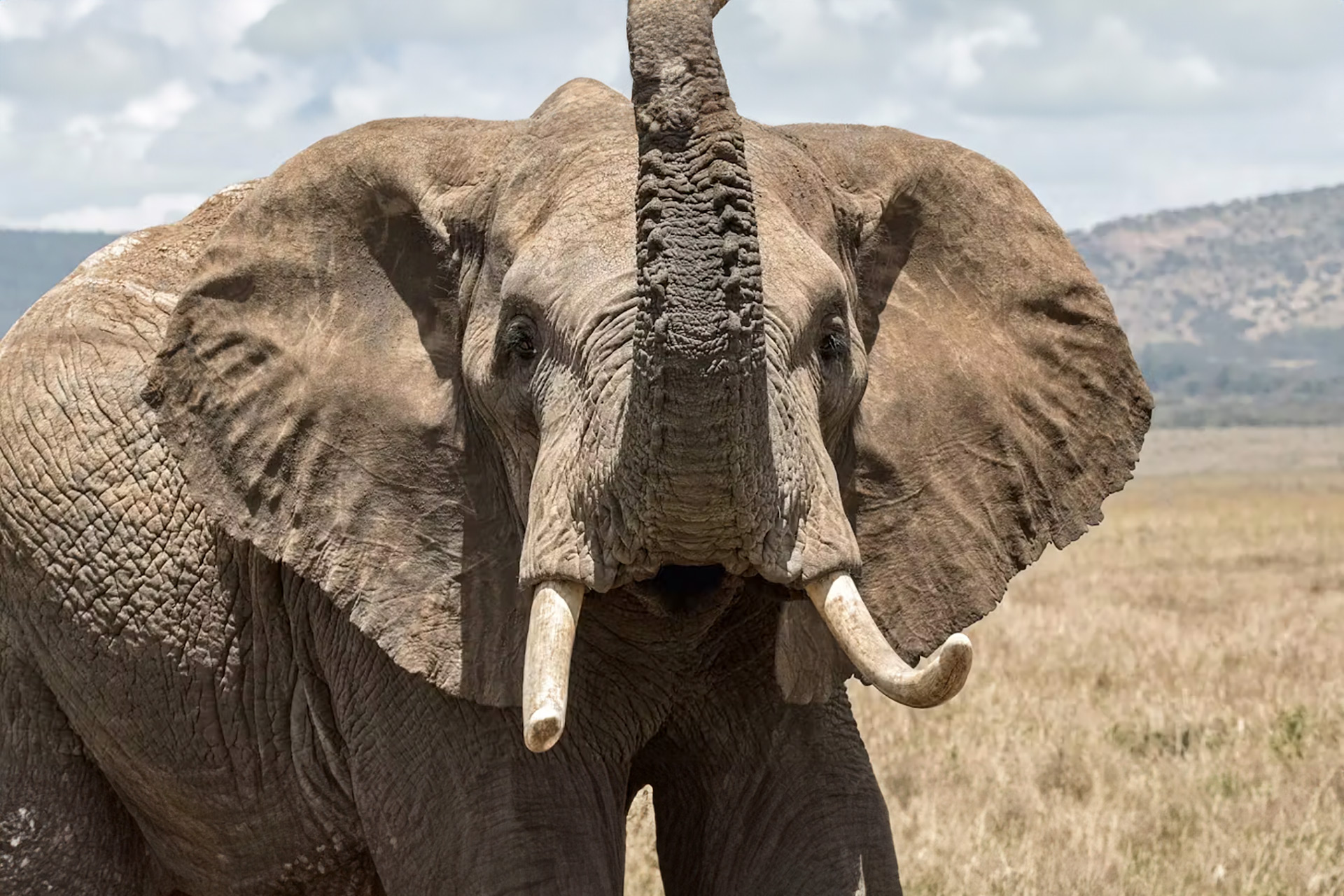
In humans or pets, large size is associated with an increased likelihood of cancer. The general idea is therefore that cancer results from a large number of cell divisions associated with genetic mutations which will reduce/break down the protective mechanisms which prevent anarchic division and the formation of tumors. However, an English statistician had shown that large animals which have a longer lifespan do not have more cancer? In other words, the evolution towards large sizes has been accompanied by greater resistance to cancer. Genetic studies have shown that the elephant has 20 copies of a gene (TP53) while we only have one. The bowhead whale, which lives for 200 years, has a very efficient DNA repair system based on 2 proteins which limit the accumulation of mutations causing the transformation of healthy cells into cancerous ones. Other animals have other protective mechanisms such as the naked mole rat….the solution to this paradox seems to be found, as is often the case, in the study of evolution. From an evolutionary perspective, the increase in early pre-reproductive cancers associated with death results in natural selection to suppress cancers. This also explains the great diversity of methods that have enabled this resistance to tumors, they have been shaped during evolution and the random genetic mutations that occur. Comparisons between species of animals, rodents and dogs, allow us to situate these developments and the protections they have conferred. As a result, we can certainly consider better understanding the protective mechanisms of cancers, but from there to moving on to a treatment, there is an improbable long path knowing how difficult the transposition of evolutionary data to clinical data is.
https://onlinelibrary.wiley.com/doi/full/10.1111/eva.12018
Photo : David Clode/Unsplash, CC BY