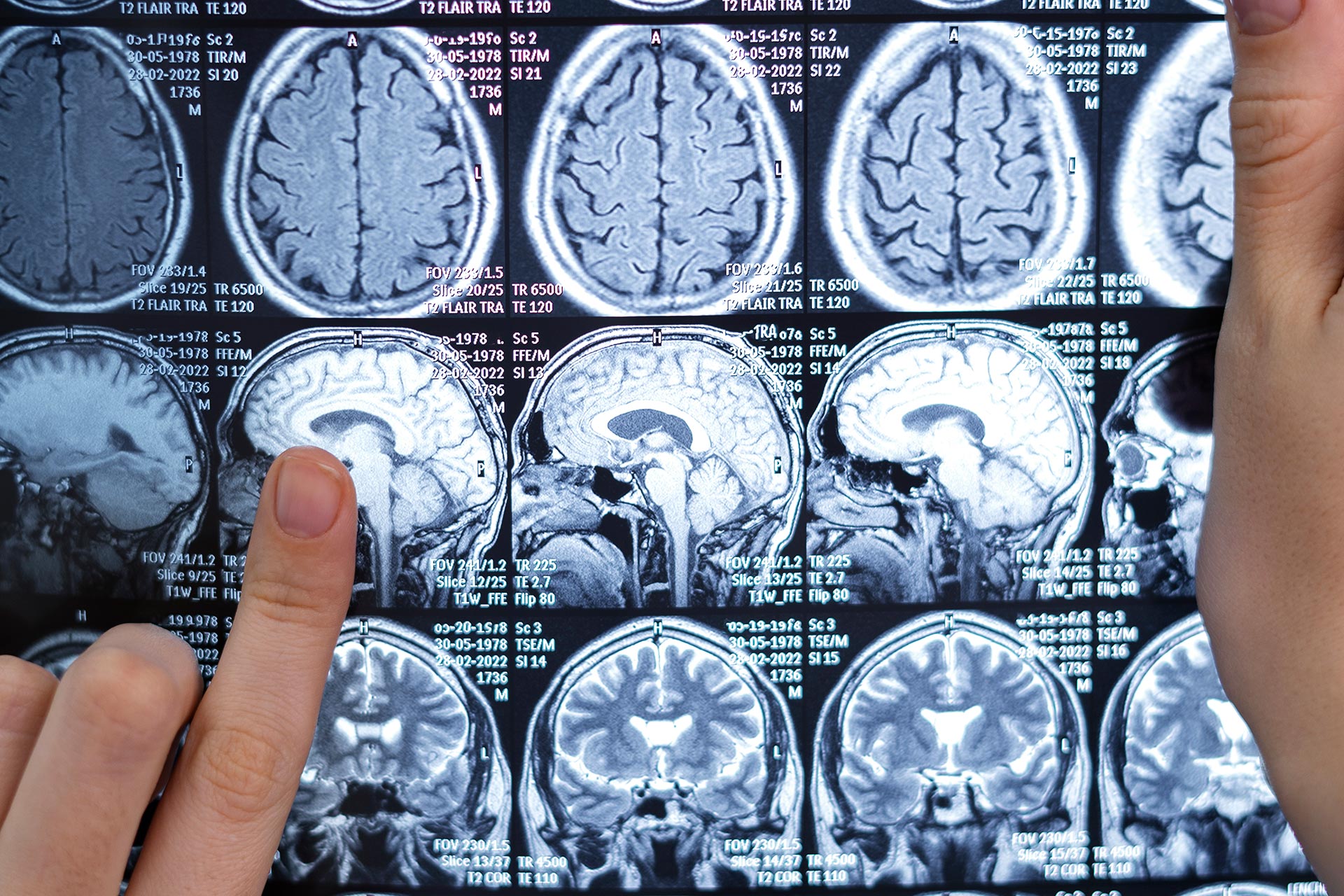
There is currently no effective treatment for brain tumours, particularly glioblastomas (GBMs), which have a low life expectancy after chemotherapy and radiotherapy. Innovations, particularly in immunotherapy and CAR T cells, are beginning to show promising results in peripheral cancers, but they are very expensive, which is a problem even for rich countries, and are completely inaccessible to most countries. Why is the brain so different? It appears that reactive plasticity plays a major role. In recent years, it has been discovered that brain tumours are invaded by neighbouring areas, with synaptic connections forming. In short, the tumour is not a closed world and the surrounding cortex is not inert. As always, neurons sprout and invade the neighbourhood, even forming aberrant connections. Even more impressive, these neurons outside the tumour become ‘young’ again, with the properties of immature cells. Thus, GABA, which inhibits adult neurons and excites young ones, regains its ‘youth’, exciting the tumour cells due to high levels of chlorine and excessive activity of our friend, which I have often mentioned before: the NKCC1 cotransporter, which, when hyperactive, increases chlorine levels in the neuron. As a result, this aberrant connection generates neuronal hyperactivity and epileptic activity that worsen the prognosis. In plain terms, electrical activity ‘increases the severity of the tumour’ and its metastasis. As is often the case, simple and elegant experiments paved the way. For example, raising mice in darkness reduces cancers of the optic tract, just as damage to the systems innervating the prostate reduces these cancers under experimental conditions. The lesson from these experiments is that we cannot treat the tumour alone; we must also address the surrounding area and block hyperactivity. This is one of the reasons why treatments fail.
Based on this dual necessity, I suggested to my colleague Dr Berger (Grenoble University Hospital) that we conduct trials based on a combination of two generic drugs: bumetanide, which blocks NKCC1 and thus reduces/blocks hyperactivity, and mebendazole, an antihelminthic known for its anti-cancer properties, which works by destroying the cell skeleton. A literature review confirmed, as usual, that the idea was not new, and numerous experimental data confirmed the very promising effects of bumetanide, particularly in treating glioblastomas, a particularly severe form of brain cancer that is completely resistant to drugs. However, to stack the odds in our favour, it seemed to me that in order to migrate and metastasise, the cells needed to flatten themselves given the pressure of the tumour and the limited space around them. And there we had it: a molecule commonly used to treat intestinal worms (taenia tecta) acts on the cellular cytoskeleton. And again, I didn’t invent anything new. Teams at the University of Baltimore (USA) have shown experimental data and pilot trials that Mebendazole, which acts on the cytoskeleton, has a beneficial effect on glioblastoma. However, the idea of combining the two is new and has enabled us to obtain a global patent on the use of this combination in the treatment of cancer.
At the same time, we studied the effects of this combination in vitro (work currently being published), showing on human glioblastoma cell lines that the two molecules work and, better still, have synergistic effects. This is the subject of this message. In addition, as these generic molecules have been repositioned, we have been able to test them on two patients with terminal brain tumours, with quite spectacular results in one of the two patients. This was a person with breast cancer that had metastasised to a completely inoperable area (the brain stem) and had failed all conventional treatments. Compassionate treatment – when there was no hope – resulted in the cessation of clinical symptoms (headaches, visual and motor problems, etc.), a significant reduction in tumour volume and survival of almost eight months, whereas the outcome, given the severity of the tumour, was imminent.
The next step, as usual, is to raise funds to conduct larger trials and, to this end, convince pharmaceutical companies and investors of the value of our approach. The moral of this brief story is that thinking outside the box always has an advantage, allowing discoveries to be made. All that remains is to bring them to fruition and provide treatment for patients. It also illustrates the advantages of generic molecules, thousands of which are lying dormant in the cupboards of pharmaceutical companies and which clearly have not yet had their last word.